A functional seizure is an episode of shaking, collapsing, staring, or losing awareness that looks very much like an epileptic seizure but has a different cause. It does not come from the burst of abnormal electrical activity that drives epilepsy. Instead, it comes from a temporary disruption in how the brain sends and processes signals — a problem with the brain's functioning, not its structure or its electrical wiring. Doctors also call these events non-epileptic seizures, dissociative seizures, or psychogenic non-epileptic seizures, often shortened to PNES.
Two facts matter more than any others. Functional seizures are real, and they are involuntary. A person having one is not acting, exaggerating, or doing it for attention. The episodes happen to them, just as an epileptic seizure happens to someone with epilepsy, and they can be every bit as frightening and disabling.
How they differ from epileptic seizures
An epileptic seizure is caused by sudden, abnormal electrical discharges in brain cells. A functional seizure happens while the brain's electrical activity stays normal. A comparison many patients find useful: epilepsy is like a hardware problem, while a functional seizure is like a software problem — the machine is intact, but a program is misfiring. From the outside, the two can look nearly identical. Some features are more common in functional seizures, such as episodes lasting many minutes, eyes held tightly closed, or movements that stop and start. But no single clue is reliable enough on its own, which is why the diagnosis should rest on testing rather than on how an episode looks.
Why the diagnosis is often delayed
Because the episodes resemble epilepsy so closely, many people are first diagnosed with epilepsy and started on anti-seizure medication. Those drugs work by calming abnormal electrical activity, so they do not help functional seizures — and when episodes keep happening despite medication after medication, that itself is an important clue. A smaller number of people have both conditions at once, which is another reason careful testing matters.
How video-EEG confirms the diagnosis
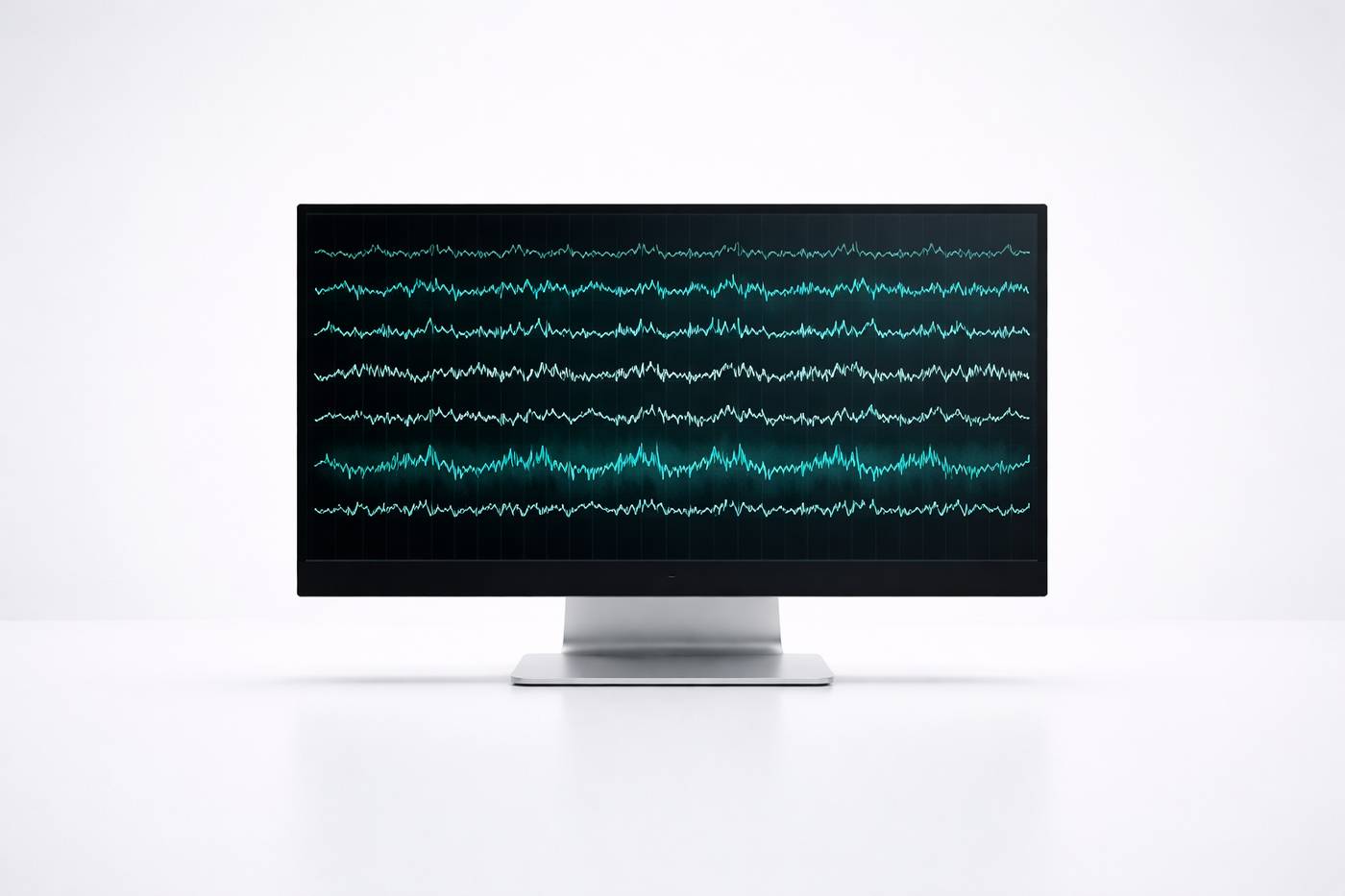
The most reliable test is video-EEG monitoring, usually done over several days in a hospital unit. An EEG records the brain's electrical activity through small sensors placed on the scalp, while a camera records the body at the same time. If one of your typical episodes occurs during monitoring, doctors can see both sides of the event at once: what it looks like and what the brain's electricity is doing while it happens. In an epileptic seizure, the EEG almost always shows a seizure pattern. In a functional seizure, it does not. Capturing a typical event this way allows a neurologist to make the diagnosis with confidence.
A smartphone video of an episode, recorded by a family member, can also help a neurologist decide whether monitoring is needed. If someone can record safely without leaving the person unattended, it is worth doing.
A diagnosis, not an accusation
Some patients hear this diagnosis as the doctors saying they are faking. That is not what it means. An older term, pseudoseizures, has been abandoned by clinicians for exactly this reason — there is nothing false about these events. Functional seizures are one form of functional neurological disorder, a recognized medical condition in which the nervous system stops working properly under certain conditions even though it is structurally normal. In many people the episodes are connected to stress, past trauma, or other health problems, but not everyone has an obvious trigger, and no one is required to produce one for the diagnosis to be real.
Treatment works
The mainstay of treatment is psychotherapy, most often cognitive behavioral therapy adapted specifically for functional seizures. This is not because the episodes are imaginary. It is because therapy is the tool that can retrain how the brain responds when an episode is building. Treatment typically involves understanding the diagnosis, learning to notice the warning sensations that often come just before an episode, and practicing grounding techniques that can interrupt one as it starts. Treating depression, anxiety, or post-traumatic stress, when present, helps as well. If you have been taking anti-seizure medication and testing shows you do not have epilepsy, your neurologist will usually taper it off gradually rather than stopping it suddenly. Many people improve substantially with treatment, and some stop having episodes altogether.
What to do during an episode
- Stay calm and stay with the person until the episode has fully passed.
- Move hard or sharp objects out of the way, and cushion the head if the person is on the ground.
- Do not restrain the person, and never put anything in their mouth.
- Speak in a quiet, reassuring voice. Many people can hear what is said around them even when they cannot respond.
- Call 911 if the person is injured, has trouble breathing, or if you are not sure what kind of seizure you are seeing.
Next steps
If you have been told you may have functional seizures, or if your seizures have not improved despite medication, the most useful step is an evaluation focused on getting the diagnosis right — a detailed history, review of any videos of your episodes, and video-EEG monitoring when needed, followed by referral to a therapist experienced with the condition. The neurology team at United Neuroscience Institute can arrange this evaluation and coordinate treatment. Support groups for people living with seizures, both epileptic and non-epileptic, also exist in many communities, and talking with others who have received the same diagnosis often makes it easier to carry.
This article is general health information, not medical advice, and does not replace evaluation by a clinician who knows your history. If you think you may be having a stroke or another neurological emergency, call 911.